Dustin Eirdosh, PhD
Education Innovation Coordinator · Max Planck Institute for Evolutionary Anthropology
"Educational innovation for understanding the human condition"
3836-1501 Loading…
About
Education & Training
Professional Experience
Publications
—
All Publications —
Computational Curriculum Studies
Committed to FAIR data and FAIR theory in curriculum studies
FAIR stands for findable, accessible, interoperable, and reusable. The lab applies it to two kinds of material: the data of curriculum research (concepts, standards, literature records) and the theory behind it (the explanatory claims that curriculum design depends on).
FAIR data
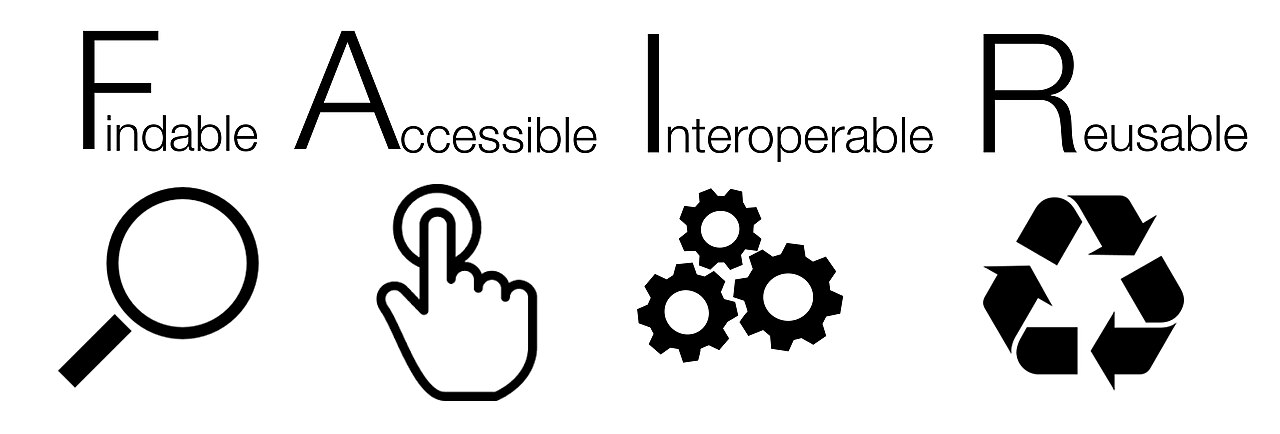
 Graphic by SangyaPundir, via Wikimedia Commons, licensed CC BY-SA 4.0.
- Every concept and vocabulary has a persistent, resolvable identifier.
- Records live in open, version-controlled repositories and can be read by people and machines.
- Shared standards underpin the data: SKOS, IEEE LOM, schema.org, and 1EdTech CASE.
- Every repository states its license (Creative Commons for most content, MIT for code).
- Literature records are checked against DOI registries.
FAIR theory
- Implement. Write the theory in a formal, machine-readable form.
- Document. Add a README and an explicit license.
- Version. Track every change in Git.
- Archive. Deposit major versions to receive a DOI.
- Describe. Add rich metadata so others can find it.
 Five-step workflow from Van Lissa et al. (2026), published under CC BY 4.0. Diagram created for this page.
- Theoretical claims, assumptions, and competing claims are stored as small, citable records, separate from the papers that introduced them.
- Each record carries its evidence, its provenance, and a status that tracks its life: proposed, accepted, superseded, or retracted.
- Interoperability is named for each use. Records already link across repositories. Linked-data (RDF) exchange with outside services is not built yet.
The lab is working toward the five-step workflow for theory proposed by Van Lissa, Peikert, Ernst, van Dongen, Schönbrodt, & Brandmaier (2026), To Be FAIR: Theory Specification Needs an Update, Perspectives on Psychological Science 21(2).
Using Natural Language Processing (NLP) to understand conceptual structures of knowledge
A repository for the computational curriculum analysis of German Lehrplan documents for the forthcoming book Hanisch (in press), Evolutionäre Anthropologie als fächerübergreifender Biologieunterricht (Springer).
Preview: Mensch vs. Evolution, as the analysis sees them (in 3D)
Each point is one excerpt from a German state curriculum (Lehrplan) that mentions the concept named above it. A language-model technique (BERTopic) groups excerpts that discuss similar ideas. A second technique (UMAP) places those groups in 3D space, so excerpts with related meaning sit close together. Color shows the school subject an excerpt comes from. A mix of colors means the concept is spread across many subjects, and one dominant color means it sits mostly in one subject. Drag to rotate.
OpenLPM
Limited betaCollaborative Learning Progression Management
A free, open platform for researchers, teachers, and curriculum policy makers to build learning progressions together, and keep improving them as classroom experience comes in. Open source, and free for schools, universities, and ministries.
- Researchers build learning progressions on evidence from the research literature, with every source traceable back to its original study.
- Educators see the thinking and classroom context behind a learning goal before bringing it into their own teaching, then suggest changes based on what they learn from using it.
- Curriculum policy makers see how learning goals connect across grades and subjects, and track how a curriculum improves as classroom experience comes in.
The platform also supports:
- Curriculum repositories organized at several geographic levels, built from open, custom, and standardized data formats.
- Project spaces at several levels, for designing learning progressions across the different contexts they may be used in.
- Development and analysis of synthetic learning progressions: deliberately constructed models used for controlled comparison.
OpenLPM is currently in limited beta testing with selected partners.
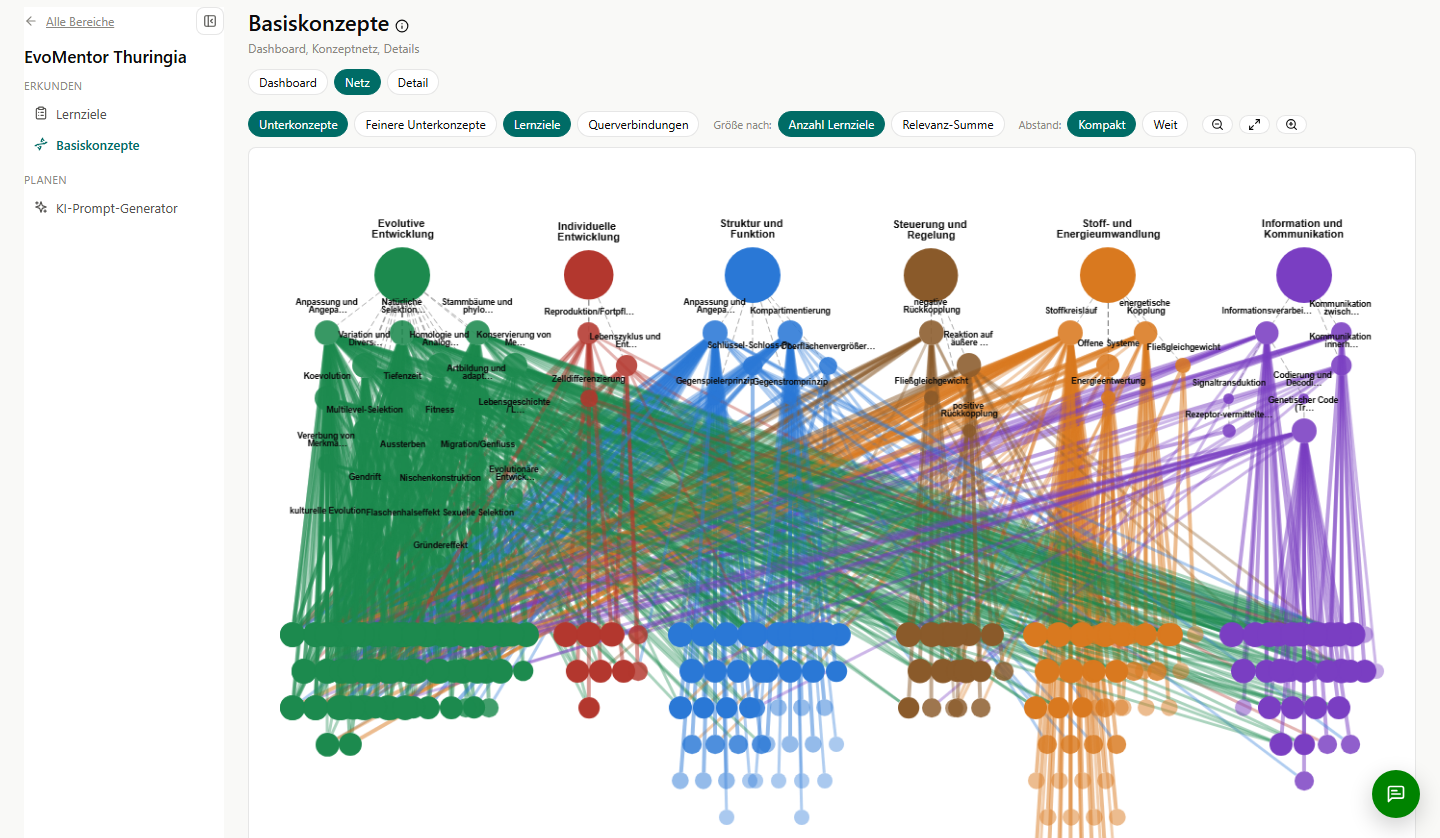
NetLogo models
A collection of 15 agent-based simulation models for teaching evolution, cooperation, and sustainability. In each model, many individual organisms or people follow simple rules, and students watch what happens at the group level. Every model runs in a web browser. The repository also holds a working space for building learning progression strands and extended learning materials around the models.